Italian restaurants range from fast-casual pizza spots to multi-course trattorie with handmade pasta and regional specialties. The gap between ordering well and ordering badly at an Italian restaurant is mostly a matter of knowing what the kitchen is actually good at — and asking one or two questions before you commit.
The most reliable orders
Pasta — what to choose and why
Pasta is the centrepiece of most Italian menus. The dish to choose depends on what sauce the kitchen makes well, not what looks most interesting. Reliable defaults at almost every Italian restaurant:
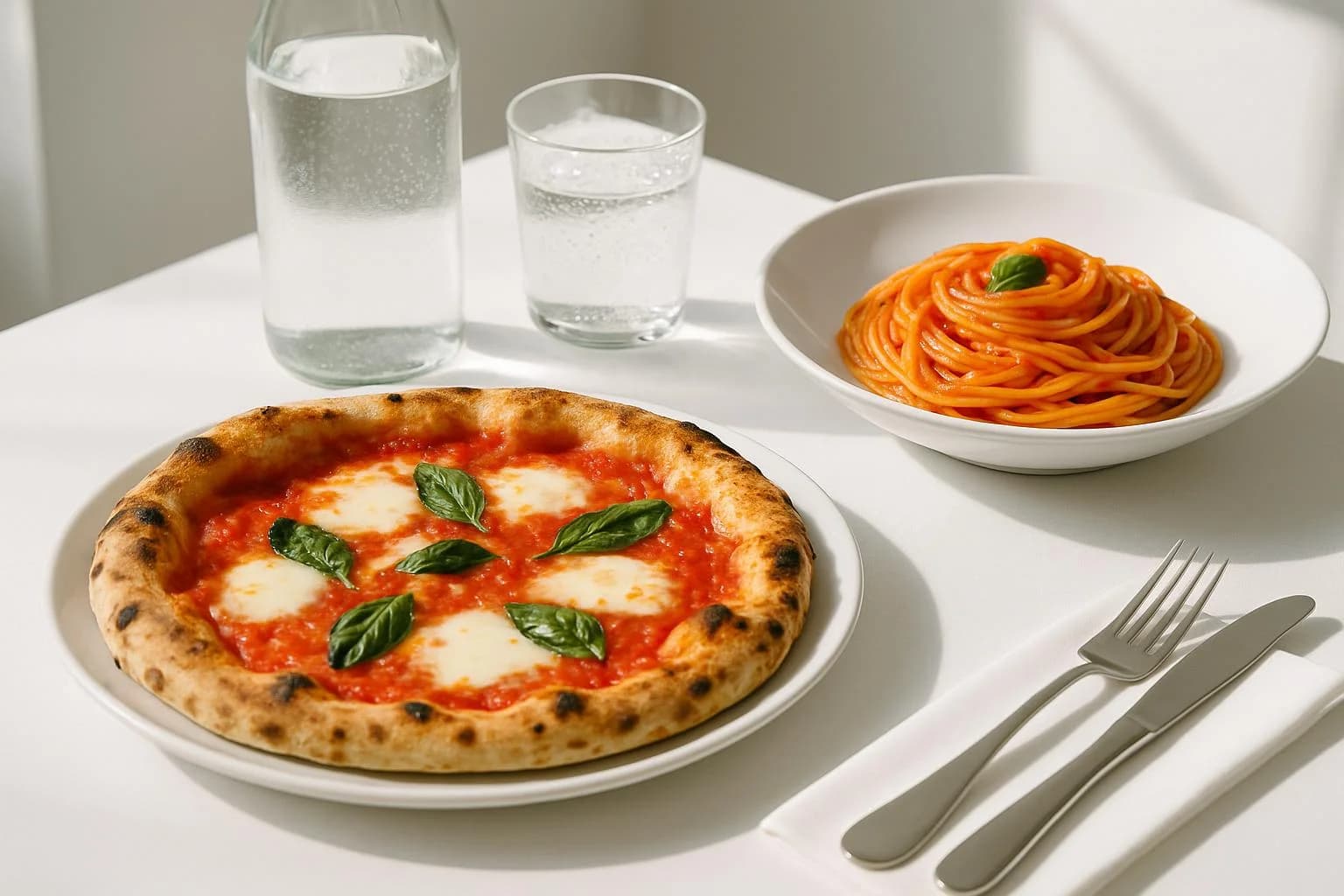
- Spaghetti al pomodoro (tomato) — the simplest and most revealing pasta on any menu. If a place can't make a good tomato sauce, the more complex dishes won't be better. Fresh basil, good olive oil, and ripe tomatoes are all you need.
- Cacio e pepe — pasta with pecorino cheese and black pepper. Requires technique to do properly (the cheese should melt into the pasta, not clump). A kitchen that does this well is a good kitchen.
- Carbonara — egg, guanciale (cured pork), and pecorino. No cream. If the menu says cream, it's an Americanised version. Both can be good — just different.
- Bolognese (ragù) — slow-cooked meat sauce. Best when it's been simmering for hours; ask how they make it if you're deciding.
- Amatriciana — tomato, guanciale, and pecorino. One of the best pasta sauces in Rome; slightly spicy from the chilli flakes.
Avoid pasta that sounds too complex or has many competing ingredients — in Italian cooking, simpler usually means better.
Pizza
If the restaurant has a wood-fired oven, the pizza is the better call over pasta in most cases. Look for char on the crust (not just the bottom), minimal toppings, and a wet centre on a Neapolitan-style pie.
Default pizza orders that work everywhere:
- Margherita — tomato, fior di latte, fresh basil. The cleanest test of the pizza's quality.
- Marinara — no cheese, just tomato, garlic, oregano, and olive oil. The oldest pizza; great if you're dairy-free.
- Diavola — spicy salami with tomato and mozzarella. Good if you want something more substantial.
- Funghi (mushroom) — particularly good if the restaurant uses proper porcini or mixed wild mushrooms.
Ask for the pizza to come out when ready rather than with mains — pizza quality drops fast once it sits.
Secondi (main courses)
At a full trattoria or ristorante, the secondi section has fish, meat, and sometimes egg dishes:
- Branzino al forno (sea bass, roasted) — usually excellent; clean, light, and simple.
- Pollo alla diavola (spatchcocked chicken with chilli and lemon) — reliable when done well; ask if it's made to order.
- Bistecca — if the restaurant does Florentine steak, it's usually the best thing on the menu. Expensive but worth it.
- Vitello (veal) — classically Italian; scaloppine in lemon or Marsala wine are easy-eating dishes.
At casual restaurants, stick to pasta or pizza. Secondi at mid-range Italian spots are sometimes overpriced for what they are.
Starters worth ordering
- Burrata — if fresh (it should be creamy in the centre, not rubbery). Serve at room temperature with good olive oil and tomato.
- Carpaccio — raw beef, sliced thin, with capers, lemon, and Parmesan. A reliable light starter.
- Bruschetta — grilled bread with tomato. Simple; quality depends entirely on the bread and tomatoes.
- Arancini — fried rice balls. A good test of whether the kitchen uses quality risotto rice.
Vegetarian and vegan options
Italian food is naturally more vegetarian-friendly than many cuisines. Pasta al pomodoro, cacio e pepe (without meat), vegetable antipasti, and Margherita pizza are all straightforwardly vegetarian.
Vegan is harder — parmesan cheese is used liberally, butter goes into some sauces, and egg pasta contains egg. Ask about:
- Whether pasta is egg-based (fresh pasta almost always is; dried pasta is usually vegan)
- Whether sauces contain butter (cream sauces do; most tomato sauces don't)
- Whether pizza dough contains milk solids (most don't, but it varies)
Marinara pizza (no cheese) is the best vegan pizza option. Pasta al pomodoro with olive oil (ask them to hold Parmesan) works well.
Gluten-free considerations
Traditional Italian pasta and pizza both contain gluten. Many Italian restaurants now offer gluten-free pasta and pizza bases — ask if they're available. Cross-contamination risk is high in a kitchen making regular pasta simultaneously; if you have coeliac disease, mention it specifically and ask about their preparation process.
Naturally gluten-free Italian options: risotto, grilled fish or meat, salads, and some antipasti. Tiramisù uses ladyfinger biscuits (contains gluten); panna cotta and gelato are usually gluten-free.
Dairy allergies and sensitivities
Parmesan and butter are used throughout Italian cooking. Pasta al pomodoro can be made without Parmesan; ask for olive oil instead. Most pizza has mozzarella — marinara (no-cheese pizza) is the standard dairy-free option. Risotto almost always contains Parmesan and usually butter.
What to ask your server
- "Is this pasta made fresh or dried?" — fresh pasta is lighter; dried can be excellent too, but it tells you what you're getting.
- "What wood do you use in the oven?" — at a serious pizza spot, they'll know and care.
- "Is the pasta egg-based?" — relevant for vegans and egg allergies.
- "Can the sauce come on the side?" — useful if you're watching fat or portion size.
- "Is this on the menu all the time, or a daily special?" — daily specials often use better seasonal ingredients.
What to avoid
- Pasta with "cream sauce" unless the restaurant is Austro-Italian (in which case it's traditional). Most Italian sauces don't use cream — menus offering cream carbonara or cream bolognese are catering to general audiences rather than cooking traditionally.
- "Chicken Parmesan" or "Chicken Marsala" on the menu as a featured item — these are Italian-American dishes; fine to eat, but they tell you the kitchen isn't trying to be authentic.
- Over-garnished plates — Italian cooking is about restraint. Eight ingredients on a pasta dish usually means the kitchen is hiding something.
Quick picks by goal
| Goal | What to order | |------|--------------| | Tasty & reliable | Cacio e pepe, Margherita pizza | | Healthy / lighter | Branzino, caprese salad, spaghetti al pomodoro | | Vegetarian | Pasta pomodoro, Margherita pizza, burrata | | Dairy-free | Marinara pizza, pasta with olive oil, grilled fish | | Adventurous | Carbonara (proper), bistecca Fiorentina, offal dishes |
Not medical advice. Confirm allergens and cross-contact with your server if you have a serious allergy or coeliac disease.
Scan your menu and get a personalised pick → Try WhatToEat