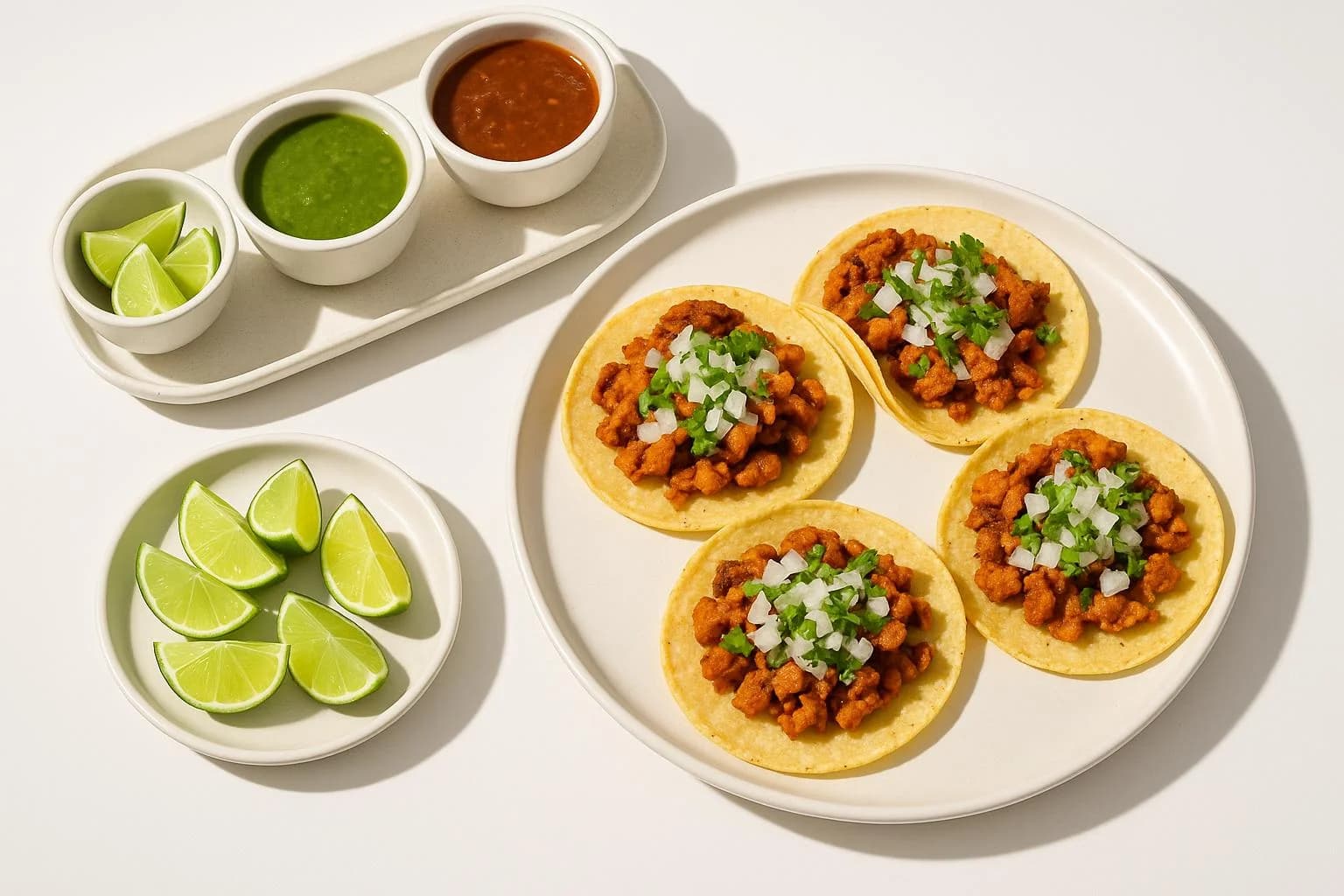
Mexican restaurants vary enormously — from fast-casual burrito chains to sit-down regional spots serving mole, birria, and cochinita pibil. This guide covers the dishes that reliably work across most places, what to watch out for, and how to get a great meal whether you're eating solo or feeding a group.
The most reliable orders
Tacos (almost always a safe bet)
Tacos are the best entry point at any Mexican restaurant. The fillings are usually made to order or assembled quickly, portions are right-sized, and you can judge quality fast. The best taco fillings to default to:
- Carne asada — grilled marinated beef, usually tender and flavourful. Ask if it's been sitting or just grilled.
- Al pastor — spit-roasted pork with pineapple. One of the best flavours in Mexican food; look for a vertical spit (trompo) if the place is serious about it.
- Pollo (grilled or stewed chicken) — the most crowd-friendly option; good for spice-sensitive diners.
- Fish or shrimp tacos — excellent at coastal-influenced spots; battered and fried or grilled.
Most good Mexican restaurants serve tacos on two small corn tortillas — don't try to eat them open like a hard shell. They're small by design; two to three tacos is a meal.
Burrito bowls and burritos
A burrito bowl (rice, beans, protein, salsa, guac) is the most customisable order on most menus. You can control every component, ask for extra protein, skip dairy, and adjust heat easily. If you're gluten-free, the bowl is the safer call than a flour tortilla burrito.
The main difference between a burrito and a bowl is structural — the bowl is easier to eat if you're ordering for dietary needs since you can see and remove components.
Fajitas
Fajitas arrive sizzling — strips of grilled meat or vegetables with onions and peppers, served with warm tortillas on the side. They're a reliable crowd-pleaser and one of the better options if you're eating with people who have different preferences, since the components stay separate.
Ask for the tortillas on the side (they often come wrapped and steam-soft) and for the sour cream and guac separately so you control how much goes in.
Quesadillas
A flour tortilla filled with cheese and optionally chicken, steak, or vegetables, toasted flat. Good as a lighter option or shared starter. Ask for it with salsa verde on the side rather than the standard red salsa if you want less heat.
Enchiladas
Corn tortillas rolled around a filling and covered in sauce — red (rojo), green (verde), or mole. The sauce is the star. If the restaurant makes their own mole, it's worth trying even if you don't normally order it.
Vegetarian and vegan options
Mexican food is more vegetarian-friendly than it appears, but there are traps. Lard is traditional in refried beans and some rice recipes — always ask. Safe vegetarian defaults:
- Bean and cheese burrito — but ask if the beans contain lard
- Grilled vegetable fajitas — straightforward and usually dairy-free if you skip the sour cream
- Cheese quesadilla — simple and reliable
- Guacamole with tortilla chips — a meal in itself at a good place
- Nopales (cactus) — if available, excellent and genuinely vegetarian
Vegan is harder but workable: skip cheese, sour cream, and clarify on beans and rice. Ask for extra guacamole and salsa to compensate.
How to handle spice
Mexican heat varies widely. The safest way to gauge it: ask your server which salsas are hot and which are mild before they arrive, and start with the mild. Green salsa (salsa verde) tends to be tangier and moderate; red salsas and anything labelled "chipotle" or "habanero" can be significantly hotter.
At table-service spots, ask for salsa on the side rather than already on the dish. At counter-service spots, pick toppings last so you can see what's what.
Allergen notes
Mexican food commonly contains: gluten (flour tortillas), dairy (cheese, sour cream, crema), tree nuts (mole often contains peanuts and almonds). Cross-contact risk is high in a busy kitchen.
- Gluten-free: choose corn tortillas, rice bowls, or no-tortilla orders. Confirm the mole and any marinades don't contain wheat.
- Nut allergies: ask about mole explicitly — traditional mole negro contains chilli, chocolate, and ground nuts. Skip mole if you can't confirm.
- Dairy-free: skip cheese, sour cream, and crema. Most guacamole and salsa are dairy-free.
Always tell your server about a serious allergy rather than just modifying the order.
What to ask your server
- "What's the spiciest thing on the menu right now?" — good calibration question.
- "Are the refried beans made with lard?" — essential if vegetarian.
- "Is the mole made with nuts?" — essential for nut allergies.
- "Can I swap the flour tortilla for corn?" — most places yes.
- "Which salsa would you recommend with this?" — servers usually know.
Best value moves
At a sit-down Mexican restaurant, the best value order is usually the lunch special (if available) or a plate that includes rice, beans, and a small protein portion. Fajitas and birria tend to be on the pricier end. Tacos and burritos are the best value for money.
If the menu has guacamole, it's often made tableside or to order — it's worth the extra cost at a place that takes it seriously.
Quick picks by goal
| Goal | What to order | |------|--------------| | Tasty & reliable | Al pastor tacos, guacamole | | Healthy | Grilled fish tacos, no tortilla bowl with extra veg | | Vegetarian | Bean and cheese burrito, veggie fajitas | | Budget | Burrito bowl or two-taco plate | | Adventurous | Birria tacos, cochinita pibil, mole negro |
Not medical advice. Confirm allergens and cross-contact with your server if you have a serious allergy.
Scan your menu and get a personalised pick → Try WhatToEat