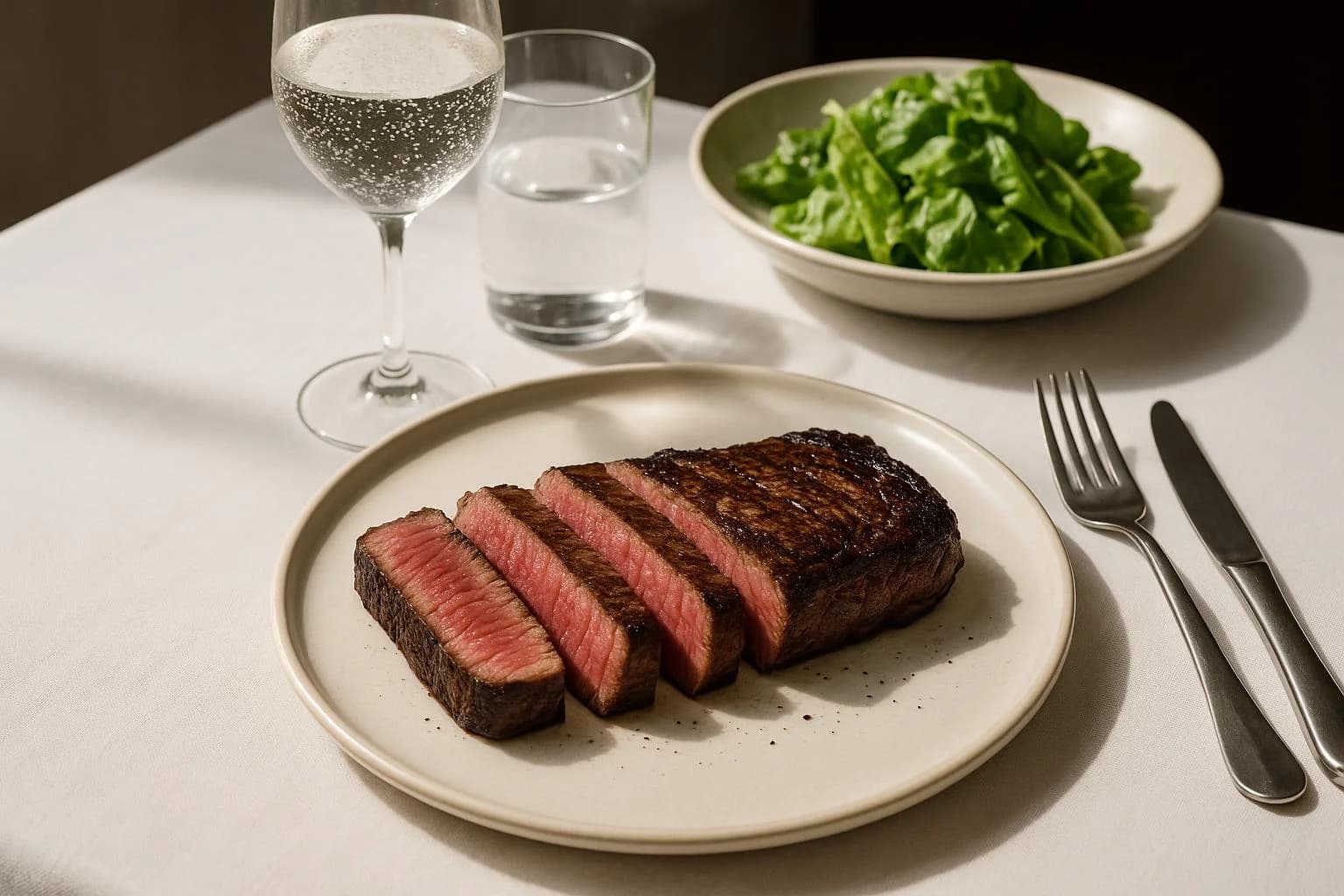
Ordering at a steakhouse sounds simple — pick a cut, pick a doneness, done. But the difference between a great steakhouse meal and an expensive disappointment comes down to a few specific decisions: which cut fits what you actually want, what doneness gets the best out of that cut, and which sides are worth the money.
Choosing a cut
Ribeye — the flavour pick
Ribeye is the most marbled cut on most menus. The fat runs through the meat (intramuscular fat, or marbling) rather than sitting on the outside, which means the flavour cooks into every bite. It's rich, slightly fatty on the palate, and forgiving — even slightly overcooked ribeye stays flavourful.
Best for: people who want the most flavour and don't mind a richer, heavier eat.
Filet mignon — the texture pick
The filet is the least-worked muscle in the cow, which makes it the most tender. It has less fat than ribeye, so it's leaner and less rich. The trade-off: less beefy flavour than a ribeye or strip. A good filet doesn't need a sauce, but it takes sauce well if you want one.
Best for: people who want the most tender cut, lighter eaters, or those sensitive to very fatty meat.
New York strip (sirloin strip) — the balance pick
A strip steak sits between ribeye and filet: more marbled than a filet, leaner than a ribeye. It has a firmer chew (a good thing — it tastes more like steak). Often the best value on the menu when priced by the ounce.
Best for: people who want a classic steakhouse experience without going to the extremes of the menu.
T-bone and Porterhouse — two cuts in one
The T-bone has a strip on one side and a small filet on the other, separated by the bone. A Porterhouse is the same thing but with a larger filet portion (the cut is taken from further back on the loin). It's the biggest steak on most menus and good for sharing.
Bone-in options
Many steakhouses offer bone-in versions of ribeye and strip — bone-in ribeye (or "cowboy cut") or bone-in strip. The bone adds flavour during cooking and keeps the meat juicier. If the price difference is small, bone-in is usually worth it.
Wagyu and dry-aged
If the menu offers Wagyu or dry-aged beef, these are significantly more expensive and significantly more flavourful. Wagyu has exceptional marbling; dry-aged beef has a concentrated, nutty flavour from the aging process. Worth it at a serious steakhouse; not worth it if the kitchen isn't treating the beef carefully.
Ordering doneness
The most common doneness orders at a steakhouse:
| Doneness | Internal temp | What it looks like | |----------|--------------|-------------------| | Rare | 125°F / 52°C | Cool red centre | | Medium-rare | 130–135°F / 54–57°C | Warm red centre | | Medium | 140–145°F / 60–63°C | Pink centre | | Medium-well | 150–155°F / 65–68°C | Slightly pink centre | | Well done | 160°F+ / 71°C+ | No pink |
Medium-rare is the most common order and the one most chefs will recommend for ribeye, strip, and filet. It maximises tenderness and lets the fat render slightly without drying out the meat.
If you genuinely prefer medium or above, that's fine — order what you actually want. A good steakhouse kitchen can execute any doneness. But know that a well-done filet will lose most of its tenderness advantage.
Sauces and add-ons
Most serious steakhouses will suggest eating a quality steak without sauce, and they're right — a properly seared ribeye doesn't need it. But:
- Béarnaise — a butter and tarragon emulsion sauce; classic and rich, good with filet.
- Peppercorn sauce (au poivre) — crushed peppercorns in cream; good with strip.
- Chimichurri — herb oil sauce, lighter and brighter, good with any cut if the restaurant is South American-influenced.
- Bone marrow butter — sometimes offered; incredibly rich, a small amount goes a long way.
Blue cheese butter, garlic butter, and compound butters are common and good. Avoid pre-made bottled sauces if the kitchen makes their own.
Sides worth ordering
Most steakhouse sides are à la carte and overpriced individually, but a couple are genuinely worth it:
- Creamed spinach — a steakhouse classic; the richness works well against the beef.
- Truffle fries or hand-cut fries — skip the shoestring and get something substantial.
- Grilled or charred asparagus — cuts through the richness better than most other vegetables.
- Mac and cheese — at a serious steakhouse it's usually made properly and is excellent.
- Bone marrow — if offered as a side or starter, worth trying once.
Skip the salad unless you specifically want to balance the meal — steakhouse salads are often an afterthought.
Starters worth ordering
- Shrimp cocktail — a steakhouse staple; simple, fresh, and a good pace-setter before a heavy main.
- Oysters — if the restaurant does them, a sign of quality.
- Steak tartare — raw seasoned beef; excellent at a place that takes beef quality seriously.
- Crab cake — good at many American steakhouses; the quality varies more than the steak.
What to ask your server
- "Which cut do you recommend tonight?" — kitchens sometimes have better product on certain cuts that day.
- "Is this cut wet-aged or dry-aged?" — tells you something about how the kitchen operates.
- "What's the best value cut right now?" — you can ask directly; good servers will tell you.
- "Can I swap the side?" — almost always yes, and worth doing if the default side doesn't appeal.
- "How long has the beef been aged?" — for dry-aged beef; 28 days is the standard, 45+ is exceptional.
Best value moves
The best value at a steakhouse is almost always the sirloin or New York strip — the flavour-per-dollar ratio beats the filet at most price points. If the menu has a bone-in strip at a moderate price increase, that's usually the best call.
Lunch service (where available) often has the same cuts at lower prices. Happy hour at the bar can have better prices on wine and cocktails to pair.
Quick picks by goal
| Goal | What to order | |------|--------------| | Maximum flavour | Bone-in ribeye, medium-rare | | Most tender | Filet mignon, medium-rare | | Best value | New York strip, medium-rare | | Something different | Bone marrow starter + steak tartare | | Lighter eat | Filet + asparagus, no sauce |
Not medical advice. Confirm allergens and cross-contact with your server if you have a serious allergy.
Scan your menu and get a personalised pick → Try WhatToEat