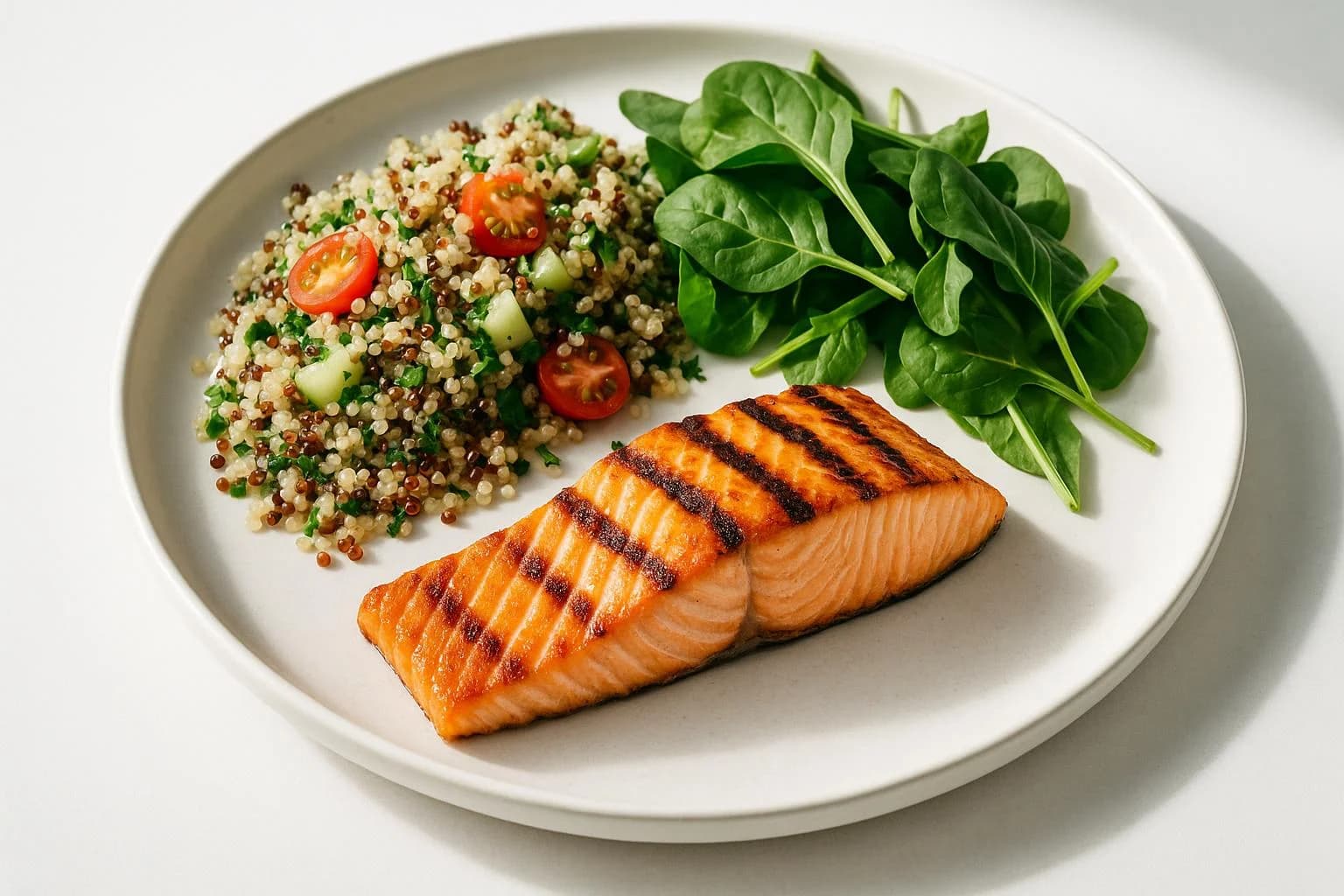
Ordering a healthy meal at a restaurant is mostly about knowing which default choices to swap. Most menus have at least a few dishes that are genuinely good for you — the challenge is spotting them quickly without turning dinner into a nutrition audit.
This guide covers the practical patterns that work across cuisines, plus the specific dishes worth ordering when you're trying to eat well without overthinking it.
What "healthy" actually means when eating out
At home, you control every ingredient. At a restaurant, you're working with what the kitchen offers — so the goal shifts from perfection to sensible defaults.
The most useful heuristic: grilled, roasted, or steamed over fried or sauced. Dishes that arrive in a pool of sauce — cream-based, heavily buttered, or deep-fried — will almost always be the higher-calorie option. Dishes with visible components (a piece of protein, a pile of vegetables, a simple starch) are easier to evaluate.
A few principles that hold across almost every cuisine:
- Protein-forward ordering — build the meal around a lean protein: fish, chicken, tofu, legumes. Everything else supports it.
- Sauce on the side — dressings and sauces are the biggest hidden calorie source. Asking for them on the side lets you control the amount.
- One starchy side maximum — bread basket, rice, and fries simultaneously is the easiest way to overeat. Pick one.
- Vegetables wherever possible — most menus have at least one vegetable side. Adding one keeps the meal balanced without sacrificing much.
By cuisine: the best healthy orders
Japanese and sushi
Japanese food is probably the most reliable cuisine for healthy eating out. The underlying cooking tradition prioritizes clean flavors and minimal fat.
Best orders: Miso soup as a starter (low calorie, genuinely satisfying). Sashimi or nigiri over rolls — rolls add rice volume and, if they're "special" rolls, mayo and tempura. Edamame as a shared starter instead of tempura. Steamed gyoza over fried. Ramen is moderately healthy — shoyu or shio broth is lighter than tonkotsu.
What to watch: Spicy tuna rolls and anything described as "crunchy" or "crispy" typically have mayo and tempura flake. Dragon rolls and similar "signature" rolls can run 400–600 calories each. Green tea is fine; sake and Japanese highballs add up fast.
Thai
Thai food is excellent for healthy eating because vegetables feature prominently and many dishes are naturally light — with the exception of coconut-milk-heavy curries and deep-fried starters.
Best orders: Tom yum soup — genuinely one of the lowest-calorie, most flavorful starters in any cuisine. Papaya salad. Stir-fried dishes with a protein (chicken, tofu, prawn) and vegetables, ordered with the sauce on the side. Larb (minced meat salad with herbs) if available. Jasmine rice is fine in moderate portions.
What to watch: Massaman and panang curries have more coconut milk than green or red curry. Pad thai with extra peanuts and extra sauce can approach 800+ calories. Spring rolls and satay in unlimited quantities add up. Coconut-based desserts.
Vietnamese
Vietnamese cuisine is one of the healthiest in the world at baseline. The cooking tradition relies on fresh herbs, light broths, rice paper, and minimal added fat.
Best orders: Pho — the broth is made from bones and aromatics, not cream. Ask for broth on the side if you want to control sodium. Fresh spring rolls (gỏi cuốn) over fried. Bún bò huế or bún riêu if available — cleaner profiles than many other noodle dishes. Grilled lemongrass chicken or pork on vermicelli (bún thịt nướng).
What to watch: Hoisin and peanut dipping sauces are calorie-dense — use sparingly. Fried spring rolls. Extra noodle portions.
Indian
Indian food gets an unfairly unhealthy reputation. The base cooking style is varied — some dishes are genuinely light, others are rich and heavy. The key is knowing which are which.
Best orders: Tandoor-cooked dishes are almost always the healthiest option — chicken tikka, seekh kebab, and tandoori fish are cooked at high heat without heavy sauces. Dal (lentil dishes) are high-protein and fiber-rich. Raita (yogurt with cucumber) is a much better side than extra naan. Saag (spinach-based dishes) are nutritious.
What to watch: Korma, butter chicken, and most "makhani" (butter) dishes are cream and ghee-heavy. Bhatura and puri are deep-fried breads. Biryani is fine in moderate portions. The bread basket adds up — two naan plus rice is usually too much starch for one person.
Mediterranean and Middle Eastern
These cuisines are naturally aligned with most definitions of healthy eating: olive oil, legumes, vegetables, grilled meats, and whole grains.
Best orders: Hummus with crudités instead of pita if you're watching carbs. Grilled fish or chicken kebab. Fattoush or tabbouleh. Shakshuka (baked eggs in tomato sauce) is an excellent lighter option. Grilled halloumi if available.
What to watch: Large portions of pita add up quickly. Falafel, while nominally vegetarian, is deep-fried — 6–8 pieces is a substantial calorie load. Lamb dishes are higher fat than chicken or fish equivalents.
Italian
Italian restaurant ordering is harder to keep light than most cuisines — the cooking tradition leans toward butter, olive oil, cream, and pasta portions that would serve two people in Italy.
Best orders: Broth-based soups (minestrone, ribollita). Grilled fish or chicken secondi, ordered with a simple vegetable side. Carpaccio or bresaola starters instead of burrata or fried calamari. Pasta with tomato-based sauces (pomodoro, marinara, arrabbiata) over cream-based.
What to watch: Anything "alla panna" (with cream) or "al burro" (with butter). Carbonara is one of the most calorie-dense pastas — it's largely egg yolk and guanciale. The bread basket. Tiramisu and panna cotta as dessert.
Steakhouse
A steakhouse menu might look challenging for healthy eating, but most of the damage is in the sides and sauces, not the steak itself.
Best orders: Leaner cuts — filet mignon and sirloin have less marbling than ribeye or T-bone. Half-portions if available. Steamed or grilled vegetables as the side, or a side salad with dressing on the side. Shrimp cocktail as a starter.
What to watch: Loaded potato skins, creamed spinach, mac and cheese, and similar sides are often 400+ calories each. Compound butters on the steak. Bearnaise and hollandaise sauces. Bread basket before the meal.
What to ask your server
A few questions that consistently help:
- "Can I get the dressing / sauce on the side?"
- "Is that grilled or fried?"
- "Can I swap the fries for a salad or vegetables?"
- "Is there a half-portion available?"
- "How is the [dish] prepared?" — useful for anything ambiguous
Most kitchens accommodate reasonable substitutions without trouble. Asking is almost always worth it.
What to avoid across all cuisines
- Deep-fried starters as a shared plate — one serving of calamari or tempura for the table is fine; a full plate each is a separate meal's worth of calories before the main arrives.
- Cream-based sauces on everything — if both your starter and main are cream-based, the meal will be very heavy.
- Multiple starches — bread + rice + chips in the same meal. Pick one.
- Dessert on a full stomach — if you're genuinely still hungry after the main, a simple sorbet is a better choice than a cream-heavy dessert.
Scan your actual menu
Every restaurant is different. WhatToEat scans the menu in front of you — whatever's on it — and picks the best dish for your goal, diet, and mood.
Not medical advice. For specific dietary or health requirements, consult a qualified professional and confirm ingredients and preparation with staff.