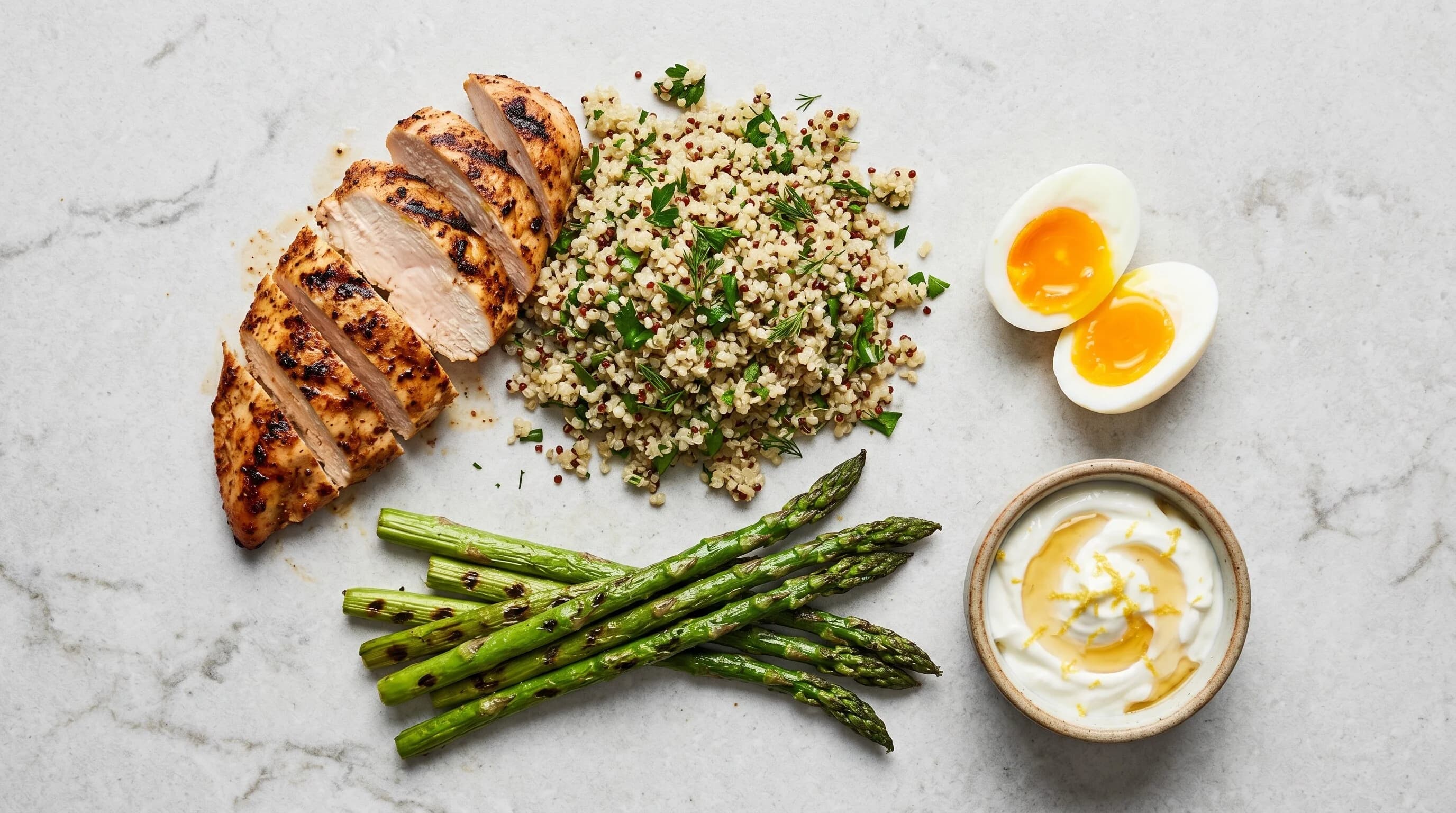
Eating high-protein at restaurants is more practical than most people expect. You don't need a special menu or a macro-tracking app — you need to know which dishes are protein-dense by default and which swaps consistently push a meal in the right direction.
This guide covers practical high-protein ordering patterns across 8 cuisines, plus the questions worth asking your server.
What counts as a high-protein restaurant meal
A useful target for a protein-focused restaurant meal is 35–50g of protein. That's achievable at most restaurants without resorting to plain grilled chicken. The main levers:
- Protein source selection — fish, lean meat, eggs, legumes, and tofu beat pasta, rice, and bread at the same plate size
- Double protein options — many restaurants will add a second portion of protein for a small upcharge. Worth asking
- Replacing starches with vegetables — swapping fries or rice for a side salad or vegetables keeps calories similar while increasing protein density
- Sauce awareness — creamy sauces add more fat than protein. Broth-based and tomato-based sauces are better for protein-forward meals
By cuisine: the best high-protein orders
Japanese and sushi
Japanese food is excellent for high-protein ordering. Sashimi is essentially pure protein — 100g of salmon or tuna sashimi delivers roughly 20–25g of protein at relatively low calorie cost.
Best orders: Sashimi (3–5 pieces per serving, each 5–7g protein). Edamame as a starter — 100g delivers about 11g protein. Teriyaki chicken or salmon with rice. Grilled fish (yakizakana) if available. Tofu-based dishes (agedashi tofu, hiyayakko) as a side.
What to ask: Many sushi restaurants will do an "omakase" style sashimi platter on request if not on the menu. For teriyaki dishes, ask for the sauce on the side to control sugar intake.
Indian
Indian cuisine is one of the most underrated options for high-protein eating. Legume-based dishes are protein-dense by default, and many tandoor-cooked meat dishes deliver 30–40g protein per serving.
Best orders: Chicken tikka or seekh kebab from the tandoor — typically 35–45g protein per portion. Dal (lentils) — a standard serving contains 15–18g protein and is often ordered as a side. Paneer dishes provide 20–25g protein per serving for vegetarians. Chana masala (chickpeas) — 15g protein per serving plus high fiber.
Protein stacking: Dal + chicken tikka + a small naan is a legitimately high-protein meal. If you want more protein without more meat, add a raita — yogurt contributes another 8–10g.
What to watch: Korma and butter chicken are lower protein-to-calorie ratios than their tandoor equivalents. Biryani is rice-heavy; order with extra raita and a side of protein if protein is the priority.
Steakhouse
Steakhouses are the most obvious high-protein option — but the execution matters. A 250g sirloin steak is 60–65g protein. The challenge is not undoing that with a heavy, starch-loaded plate.
Best orders: Sirloin or filet mignon — leaner cuts than ribeye, equally high in protein. Grilled shrimp or lobster tail as a starter (shrimp is one of the highest protein-per-calorie foods available). Steak + grilled vegetables is a cleaner, higher protein-density plate than steak + fries + creamed sides.
Smart swaps: Replace one side dish with a side salad. Ask for compound butter on the side. Skip the bread basket before the steak arrives — it adds calories without protein.
Portion note: Most steakhouse steaks are 200–350g raw weight, translating to 40–70g protein cooked. Sharing a larger cut and adding a shrimp starter is often a better protein-per-calorie strategy than ordering two separate mains.
Mexican
Mexican food is underrated for protein. The building blocks — beans, meat, eggs, cheese — are all protein sources. The challenge is the tortilla and rice volume that often comes with them.
Best orders: Grilled chicken or steak tacos (3 tacos = roughly 35–40g protein). Carnitas — pork carnitas is high-protein and relatively lean after the fat renders during cooking. Huevos rancheros if available at brunch. Black beans as a side add 8–10g protein per half-cup.
Protein stacking: Ask for extra meat instead of extra rice in a burrito or bowl format. Many places charge a small upcharge for double protein — worth it.
What to watch: Refried beans are lower protein than whole black beans. Sour cream and cheese add fat more than protein. Corn tortillas have slightly more protein than flour — but the difference is minimal compared to the filling.
Chinese
Chinese restaurant ordering for high protein requires some navigation — many dishes are vegetable and noodle heavy, with protein as a supporting element rather than the main component.
Best orders: Stir-fried dishes with a named protein — kung pao chicken, beef and broccoli, Ma Po tofu — tend to have more protein than noodle dishes where protein is an afterthought. Peking duck is high protein. Hot and sour soup is a surprisingly decent starter — eggs add protein to the broth.
What to ask: Many Chinese restaurants will customize protein amounts. "Extra chicken, less noodle" is a reasonable request in a stir-fry dish. Steamed dumplings (zheng jiao) have more protein per calorie than fried.
What to watch: Fried rice and lo mein are carbohydrate-heavy with protein as a minor component. Sweet and sour dishes are usually battered and fried, lowering the protein-to-calorie ratio significantly.
Thai
Thai food can be high-protein with the right dish choices. The issue is that many popular Thai dishes emphasize noodles, rice, and coconut milk over protein.
Best orders: Grilled satay — chicken satay is 5–7g protein per skewer, and orders typically come in 4–6 pieces. Larb (minced meat salad) is exceptionally protein-dense and relatively low calorie. Stir-fried dishes (pad see ew, pad kee mao) can be ordered with extra protein. Tom yum with shrimp or chicken.
What to ask: "Can I have extra chicken/prawn?" is a standard request at most Thai restaurants. Ask for jasmine rice on the side so you can control the starch-to-protein ratio.
What to watch: Pad thai is noodle-heavy — a standard plate might have 20–25g protein but 500–700 calories. Coconut-based curries dilute the protein density with fat from the coconut milk.
Mediterranean and Greek
Mediterranean cuisine is excellent for high-protein ordering — the grilling tradition produces protein-dense dishes, and legumes feature prominently in mezze options.
Best orders: Grilled fish (lavraki/sea bass, swordfish, octopus) — 30–40g protein per serving. Chicken souvlaki or lamb skewers. Grilled halloumi for a vegetarian protein source (about 20g per 100g). Hummus — about 8g protein per 100g serving.
Protein stacking: Order a protein main + hummus as a starter instead of bread. Adding a Greek salad with extra feta bumps protein significantly. Tzatziki (yogurt-based) contributes another 5–8g.
What to ask your server
These questions consistently produce higher-protein meals:
- "Can I get extra [chicken/fish/tofu] instead of extra rice?"
- "Is a double protein option available?" (common at fast-casual and bowl-style restaurants)
- "Can you make that with extra [edamame/beans/egg]?"
- "Can the sauce come on the side?" (lets you add protein without the extra calories from creamy sauces)
- "What's in the broth?" (for soups — egg or bone broth bases add protein)
Protein estimates by food type
A rough reference for ordering decisions:
| Food | Typical serving | Protein | |---|---|---| | Chicken breast (grilled) | 150g | 45g | | Sirloin steak | 200g | 50g | | Salmon fillet | 150g | 35g | | Sashimi (tuna/salmon) | 100g | 22g | | Paneer | 100g | 18g | | Dal (lentils) | 200g | 16g | | Edamame | 100g | 11g | | Eggs | 2 large | 12g | | Hummus | 100g | 8g | | Halloumi | 100g | 20g |
Scan your actual menu
Every restaurant menu is different. WhatToEat scans the menu in front of you and picks the highest-protein dish that fits your restrictions and mood.
Not medical advice. Protein counts are estimates — confirm with staff for dishes where exact nutritional content matters.